How to spot hail and wind damage on siding in Kenosha, WI
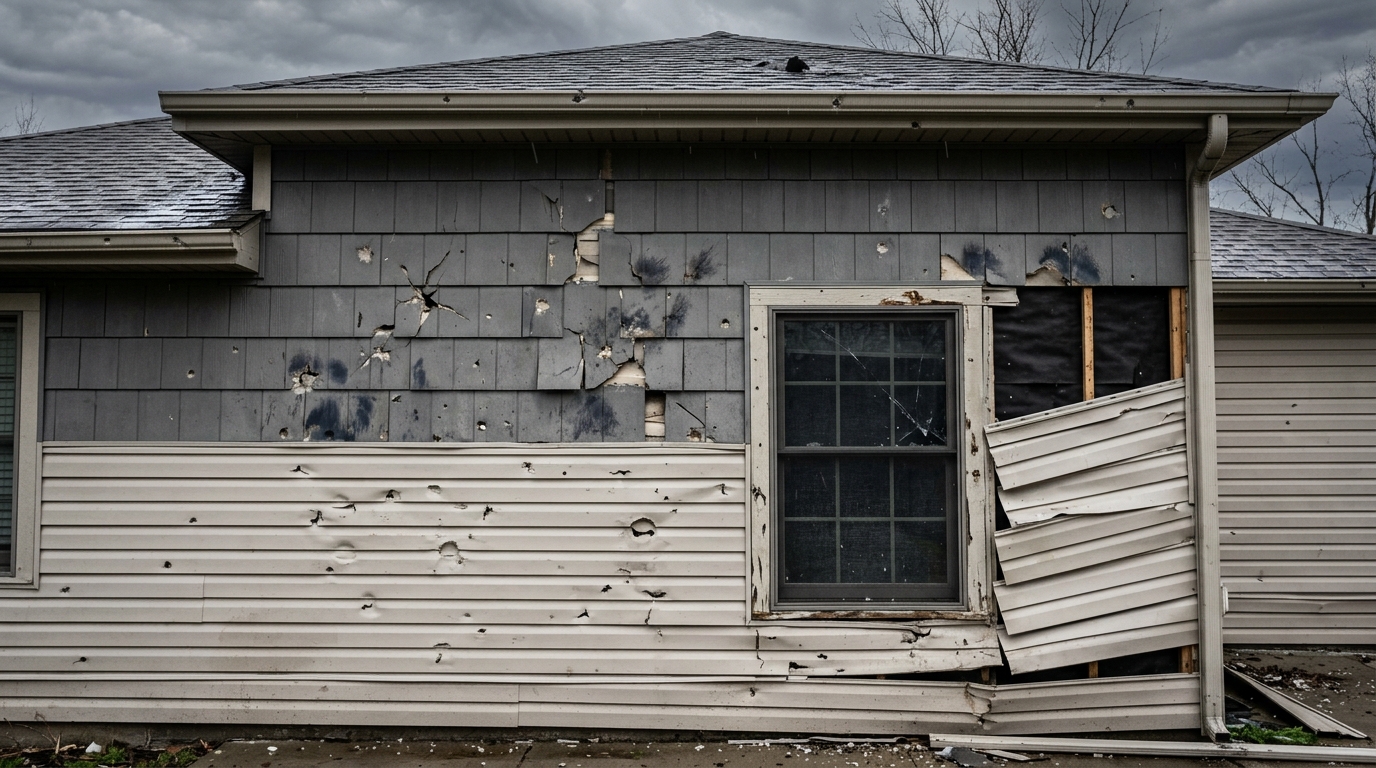
Spotting hail and wind damage on siding in Kenosha, WI is trickier than spotting it on a roof, because siding damage hides in plain sight and gets left off most storm claims entirely. After a spring hailstorm or a summer straight-line wind event off Lake Michigan, adjusters climb up to look at the roof and never really study the walls. That is the gap. This guide teaches you what hail bruising, cracking, chalking, and wind-loosened panels actually look like on vinyl, aluminum, fiber cement, and cedar, so you can flag siding damage before it gets missed. Vision Quest 11:11 LLC is a locally owned general contractor, a registered Wisconsin LLC and insured, and we inspect the roof, siding, and gutters as one system so the whole storm claim gets documented together.
A roof-only scope can leave real, covered siding damage on the table, and once the roof claim closes it is a fight to reopen it for the walls.
Here is the part almost nobody tells you: a roof-only scope can leave real, covered siding damage on the table, and once the roof claim closes it is a fight to reopen it for the walls. Siding is the second most common exterior loss we document in Kenosha County after roofing, and it is the one homeowners overlook because vinyl and aluminum can look fine from the curb while they are cracked or bruised up close.
How to spot hail damage on siding
Hail damage on siding shows up as chips, cracks, dents, and dime-to-quarter-sized bruised spots on the side of the house that faced the storm, usually the north and west walls here. On vinyl it reads as cracks and holes. On aluminum it dents like a car hood. Chalky white residue or missing color on impact spots is a tell that granules or finish took a hit. Check within a few weeks of the storm, before weather blurs the evidence.
- Cracks and holes. Vinyl gets brittle in the cold, so a hailstone that would only dent siding in July can punch a clean crack or hole in a January-adjacent cold snap. Look low and at panel edges where cracks start.
- Dents and dimples. Aluminum and steel siding dent like sheet metal. Run a flashlight along the wall at a low angle after dark and the dimples pop out as shadows you cannot see head-on in daylight.
- Chalking and color loss. A bruised or chipped spot often shows a lighter, chalky mark where the finish or top layer was knocked off. On painted siding it looks like a fresh ding through the paint.
- Impact pattern. Real hail hits on one directional face in a scattered, random spread, not one neat row. Matching dents on the gutters, downspouts, window wraps, and AC unit fins on that same wall confirm it was hail.
The honest problem is that a lot of hail damage on siding is real but not obvious, and a scope written from the ground on one side of the house misses it. That is exactly why we walk all four walls with the roof, and it is why we point homeowners to a documented roof, siding, and gutter storm damage inspection handled as one claim rather than a roof-only look.
Wind damage on vinyl siding: what to look for
Wind damage on vinyl siding shows up as loose, rattling, unzipped, or missing panels, usually along the top and corner edges where straight-line wind gets under the courses and peels them up. A panel that has come unlocked from the one above it will flex or lift when you push on it, even if it looks seated from the street. Cracked nailing hems and blown-off corner and J-channel pieces are the other common wind tells here.
Vinyl is designed to lock course-over-course, so wind damage tends to cascade: once one panel unzips, the wind gets more leverage on the next one up. That is why a single loose panel after a big blow is worth a real look, not a shrug.
- Loose or rattling panels. Push gently near the top of a course. Movement or a click means the lock let go.
- Unzipped seams. Panels that have separated at the vertical seams, showing the wall wrap or a dark gap behind them.
- Missing panels or trim. Whole courses, corner posts, or J-channel blown off, most often on the windward gable end.
- Cracked nailing hems. The strip along the top edge that holds the nails splits, so the panel is still there but no longer fastened.
Hail damage on aluminum vs vinyl siding
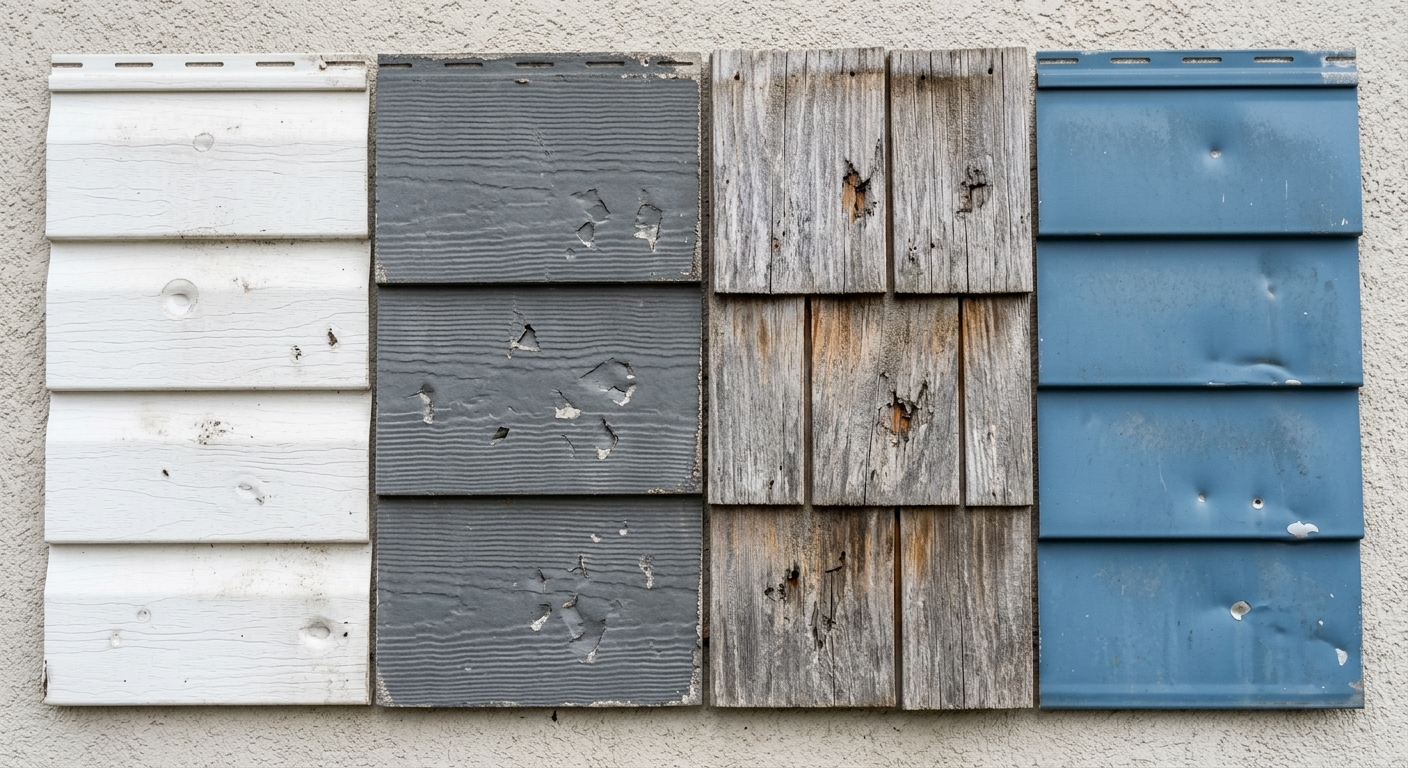
Aluminum and vinyl fail differently under hail, and knowing which you have changes what you are looking for. Aluminum dents and holds the dent, so damage is permanent and easy to confirm with low-angle light but easy to miss straight-on. Vinyl cracks and chips instead of denting, and it does it worse in cold weather, so a mild-looking storm in a cold snap can crack more vinyl than a harder summer storm.
The mistake we correct most on siding claims: an adjuster glances at vinyl, sees no dents, and calls it undamaged. Vinyl does not dent, it cracks. Judging vinyl by the aluminum standard is how legitimate hail cracking gets written off as wear.
Fiber cement and cedar are their own cases. Fiber cement is tough but hail can chip the surface and crack boards along nail lines, and cedar shakes and lap can split and gouge. All four materials share the same trap: the damage is verifiable up close and invisible from the curb, which is the whole reason a walk-the-wall inspection beats a drive-by every time.
When siding damage is NOT a claim, and we will tell you
We would rather tell you the truth than talk you into a claim you should not file. If your siding is just faded, has old settling cracks around windows, or shows a couple of dings with no matching hail evidence on the gutters and downspouts, that is age and maintenance, not a storm loss, and filing it can put a needless denial on your record. Insurers track claim history. If someone knocks on your door after a storm and immediately tells you your siding is totaled without checking the storm-facing wall against the gutters and vents, get a second opinion before you sign anything.
Does insurance cover hail damage to siding?
Yes, in most cases. A standard homeowners policy generally covers storm-caused hail and wind damage to siding the same way it covers the roof, and you pay your deductible instead of the full repair cost. The catch is documentation and timing. Siding damage that is caught, photographed, and reported alongside the roof gets covered. Siding damage found after the roof claim already closed is a much harder fight, which is why the two belong in the same claim.
- Inspect all four walls, not just the roof. We photograph the storm-facing siding with dated photos the way an adjuster needs to see it, including the matching hail evidence on gutters and vents that proves the cause.
- Report roof and siding together. When you open the claim with your carrier, name the roof, siding, and gutters, so it is scoped as one loss rather than three visits.
- Walk the walls with the adjuster. We meet the adjuster on-site so the siding damage on the far wall does not get skipped, because the far wall is exactly where it gets skipped.
- Do the work to the approved scope. Once the claim settles, matching and replacing the damaged siding is completed to the approved scope, and you pay your deductible, not a surprise balance.
Matching is the siding wrinkle worth knowing about. Discontinued colors and profiles can make a partial siding repair impossible to blend, which is part of the coverage conversation on older Kenosha homes. When a storm has chewed up a whole wall, we handle it as documented storm and hail siding damage repair in Kenosha, claim paperwork and all. Call us at (414) 312-1016 and we will look at it before it gets covered up.
Get your Kenosha siding storm damage documented before it is missed
The single biggest reason legitimate siding damage goes unpaid is that nobody documented it while the roof claim was open. The fastest path is a free storm inspection where we walk all four walls plus the roof, photograph any hail and wind damage the way an adjuster needs to see it, tell you honestly whether you have a claim worth filing, and if you do, walk the property with your adjuster so the approved scope covers the whole exterior.
Call Vision Quest 11:11 LLC at (414) 312-1016 or request a free storm inspection online. We are a registered Wisconsin LLC and insured, we serve Kenosha and Kenosha County communities within about 25 miles, and when a storm hits the whole exterior we document the roof, siding, and gutters as one coordinated claim. If you want the full claim walkthrough first, read how to file a storm damage insurance claim.
FAQ
Should I repair or replace hail-damaged siding?
Repair when the damage is isolated to a few panels, the siding is newer, and the color and profile are still available to match. Replace the affected walls when the damage is widespread across a storm-facing side, when the siding is old and brittle enough that removing and reinstalling panels cracks the good ones, or when the exact color and profile are discontinued so a partial repair would leave an obvious mismatch. Matching is the deciding factor more often on siding than on roofing: a technically small repair can force a larger replacement simply because the old color no longer exists. We give you the honest repair-versus-replace read on-site and put it in writing before you spend a dollar.
How long do I have to file a siding storm claim in Wisconsin?
Sooner is always better, and you have less time than you think. Many Wisconsin homeowners policies require prompt notice after a loss, and a common written window for property damage claims is around one year from the storm date, but the exact deadline is set by your specific policy, so read it or call your carrier. Do not treat one year as a safe cushion. Siding damage reported months later is harder to tie back to a specific storm, especially after a winter of freeze-thaw has added its own cracks, and that is where claims get denied. The practical rule we give Kenosha County homeowners is to get the walls looked at within a few weeks of a serious storm, at the same time as the roof, not months later.
*This guide is general education on spotting storm damage and the Wisconsin claim process, not legal or insurance advice. Filing windows, coverage, matching rules, and deductibles are set by your specific policy, so read it or call your carrier for your exact terms. Vision Quest 11:11 LLC documents storm damage and supports your claim; we do not adjust claims or guarantee an outcome. Free inspection: call (414) 312-1016 or request one online.